
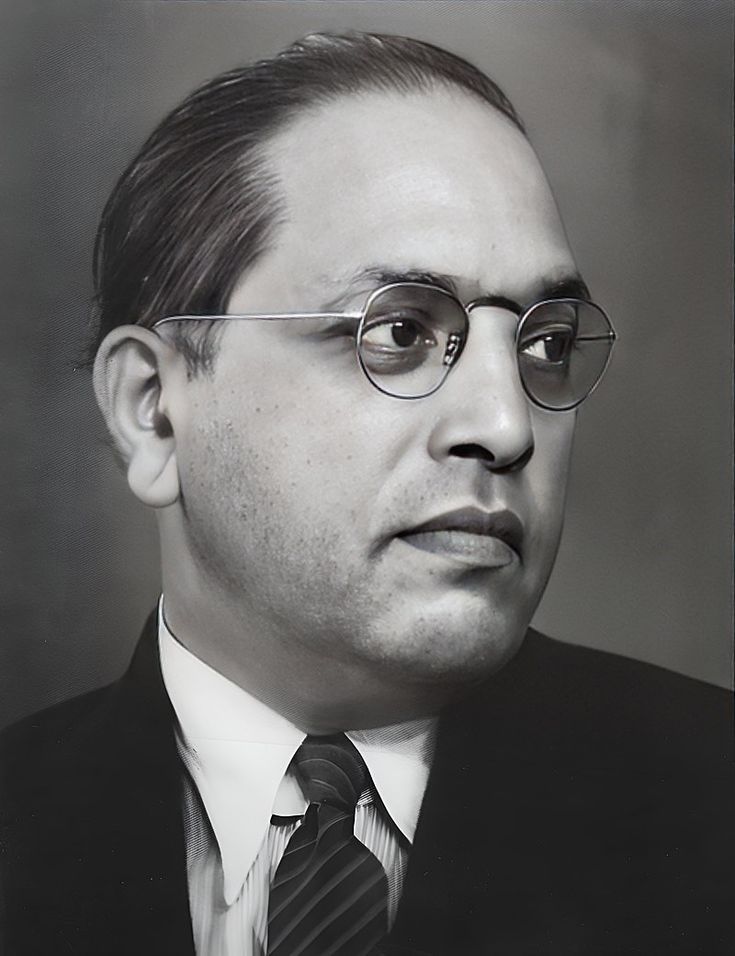
I like the religion that teaches
liberty, equality, and fraternity.
Dr. Bhimrao Ambedkar
Dr. Bhimrao Ramji Ambedkar (14 April 1891 – 6 December 1956) was a great Indian jurist, economist, social reformer, and political leader. He is widely known as the Father of the Indian Constitution.
He was born in Mhow, Madhya Pradesh, into a marginalized community and faced severe social discrimination from childhood. Despite these hardships, he demonstrated exceptional talent and determination in education.
Ambedkar pursued higher studies abroad, earning a Ph.D. from Columbia University and a D.Sc. from the London School of Economics. He also qualified as a barrister at Gray's Inn, London, becoming one of the most highly educated Indians of his time.
After returning to India, he dedicated his life to the upliftment of marginalized communities. He led campaigns to secure education, public facilities, and jobs for Dalits and other socially disadvantaged groups.
Dr. Ambedkar was also a prolific writer and thinker. He wrote extensively on social reform, economics, and law, and his works became guiding principles for the fight against caste discrimination.
After India gained independence in 1947, Ambedkar became the Chairman of the Drafting Committee of the Indian Constitution . He ensured that the Constitution guaranteed equality, justice, and fundamental rights for all citizens.
Beyond law and politics, he championed women's rights and believed that the progress of a society could be measured by the empowerment of its women. "I measure the progress of a community by the degree of progress which women have achieved."
In 1956, Dr. Ambedkar embraced Buddhism, along with millions of followers, as a path of equality, compassion, and rational thinking.
Dr. Ambedkar passed away on 6 December 1956, leaving behind a legacy of courage, knowledge, and social reform. His life continues to inspire millions.
Today, Babasaheb Ambedkar is remembered not only as a lawmaker and scholar but also as a symbol of empowerment and social justice.